
A Plain-English Bookkeeping Guide Every UK Sole Trader Should Read
If you’re a UK sole trader or self-employed and you’ve ever thought, “I’ll sort the bookkeeping later,” this short guide will feel uncomfortably familiar—in the best possible way.
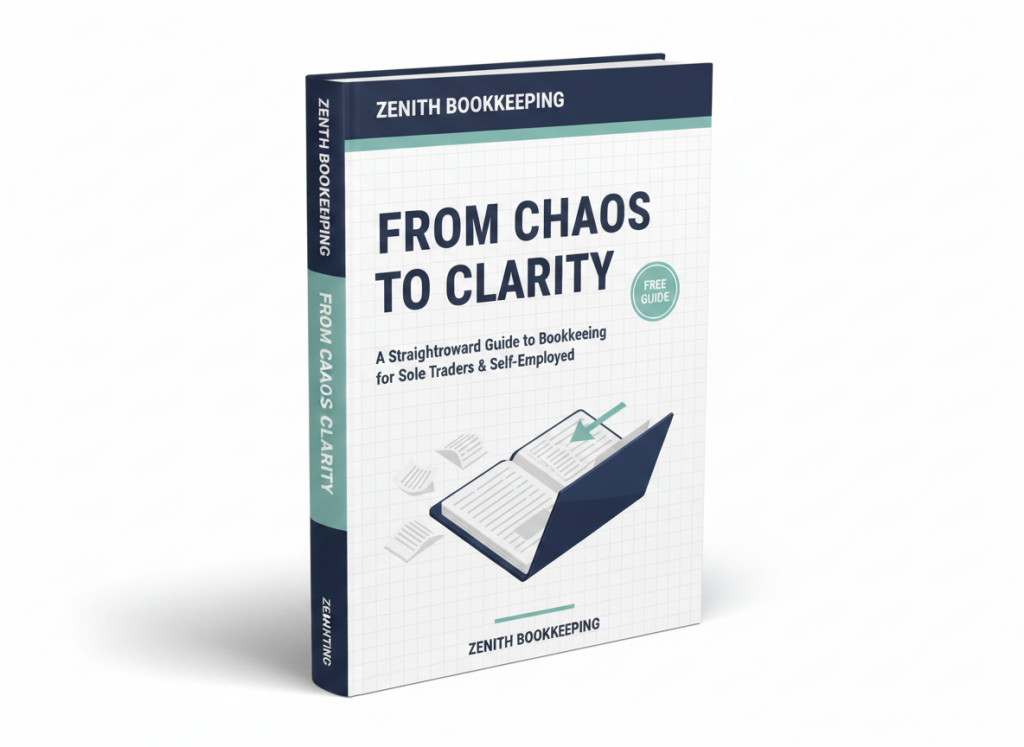
From Chaos to Clarity: The Truth Nobody Cares Enough About (by Zenith Bookkeeping, in conjunction with Business Buddy Books) is a straightforward, jargon-free reset for anyone who wants to feel more in control of their money without turning their evenings into spreadsheet prison.
This isn’t a textbook. It’s a practical, confidence-building nudge toward better habits—written for real people running real businesses.
What the book gets right (and why it matters)
1) It tells the truth about the “danger zone”
The early stage of building a small business is exciting, but it’s also when you’re most vulnerable. The book calls this the danger zone—that messy period where you’re doing “a hundred jobs at once”, and the bookkeeping hat ends up at the bottom of the hat-stand.
The case study of Alison, a freelancer, will resonate with a lot of readers: receipts piling up, uncertainty over allowable expenses, deadlines creeping closer, and that constant question—“Am I actually making money?” It’s a simple story, but it captures the reality most people don’t talk about.
2) It reframes bookkeeping as control (not paperwork)
One of the strongest lines in the book is the message that bookkeeping isn’t admin—it’s business control.
When your records are up to date, you can see what’s happening and make decisions faster:
- What you’re earning (and from where)
- What you’re spending (and why)
- What you can afford (and what you can’t)
- Where returns are strong or weak
- What needs attention now
That shift—from “bookkeeping as a chore” to “bookkeeping as a dashboard”—is exactly what most sole traders need.
3) It gives a genuinely doable 60-minute setup
The “Quick Start” chapter is worth the read on its own. It doesn’t demand perfection; it demands a system you’ll actually use.
The checklist is refreshingly simple:
- Choose a dedicated business bank account
- Decide how you’ll record transactions (software or spreadsheet)
- Create 6–8 categories (income + main expense groups)
- Set up receipt capture (phone photos, email folder, or an app)
- Create an invoices folder (sent + paid)
- Book a weekly 30-minute slot for updates
- Book a monthly 45-minute slot for review
- Set up a “tax pot” (separate savings account) if possible
This is the kind of plan that reduces overwhelm because it’s specific, time-bound, and realistic.
4) It tackles the mistakes that cost money—without judgement
The book’s “common mistakes” section is blunt but supportive. It calls out the big ones:
- Leaving it until later
- Mixing business and personal spending
- Not tracking expenses properly
- Confusing profit with cash
- Only looking at the numbers once a year
It also adds a timely reminder that the UK is moving toward more structured digital reporting (including Making Tax Digital initiatives). The direction is clear: leaving your finances until year-end is becoming a bigger risk.
5) The worked examples make the numbers finally click
A lot of bookkeeping content fails because it stays abstract. This book doesn’t.
The worked examples (service business and product business) show the difference between gross profit and net profit, and then deliver the reality check many people miss:
- Net profit isn’t automatically “spendable cash” because you may still need to set aside money for Income Tax and National Insurance.
For product businesses in particular, the margin lesson is sharp: sales can look great, but direct costs decide whether you’re building a business—or buying yourself a job.
6) It builds a routine you can keep
The weekly/monthly/quarterly routine table is practical and non-negotiable in the right way:
- Weekly (30–45 mins): log income, capture receipts, match bank transactions, chase overdue invoices
- Monthly (45–60 mins): check profit, review cash flow forecast, top up tax pot, review spending patterns
- Quarterly (60–90 mins): review pricing, review subscriptions, plan for upcoming tax needs
This is the kind of structure that turns “I should” into “I do.”
Who should read it?
This guide is ideal if you’re:
- Newly self-employed and want to start clean
- Busy and behind, and need a simple way to regain control
- Anxious about HMRC, deadlines, or tax surprises
- Growing and ready to treat your finances like a business tool
It’s also a great fit if you want plain English and practical steps—without being talked down to.
DIY vs done-for-you: a helpful, honest close
The book finishes with a clear decision guide: DIY can work, but it costs time and mistakes are easy. Done-for-you support can pay for itself through accuracy, insight, and peace of mind.
It’s not a hard sell—it’s a sensible frame for choosing what fits your stage of business.
Final verdict
From Chaos to Clarity is exactly what it claims to be: a short, no-jargon guide that helps UK sole traders build a bookkeeping routine that sticks.
If you’ve been avoiding your numbers, this book won’t shame you—it will give you a simple plan, a bit of confidence, and the push to get started.
Want a copy?
If you’d like a copy of From Chaos to Clarity, request one from Zenith Bookkeeping.
It’s a quick read that could save you hours of catch-up, reduce tax-time stress, and help you make better decisions with the money you’re already working hard to earn.
Order your copy here: https://zenithbook-keeping.uk/zenith-bookkeeping-book-offer-page