
For Sole Traders & the Self-Employed
If you’re a sole trader, bookkeeping is one of those tasks that’s easy to push down the list. Not because you’re careless; usually it’s because you’re busy doing the work that actually brings in money. The trouble is, when bookkeeping slips, it doesn’t stay a small problem. It tends to show up later as stress, missed expenses, and that horrible “I have no idea what I owe” feeling when Self Assessment is due.
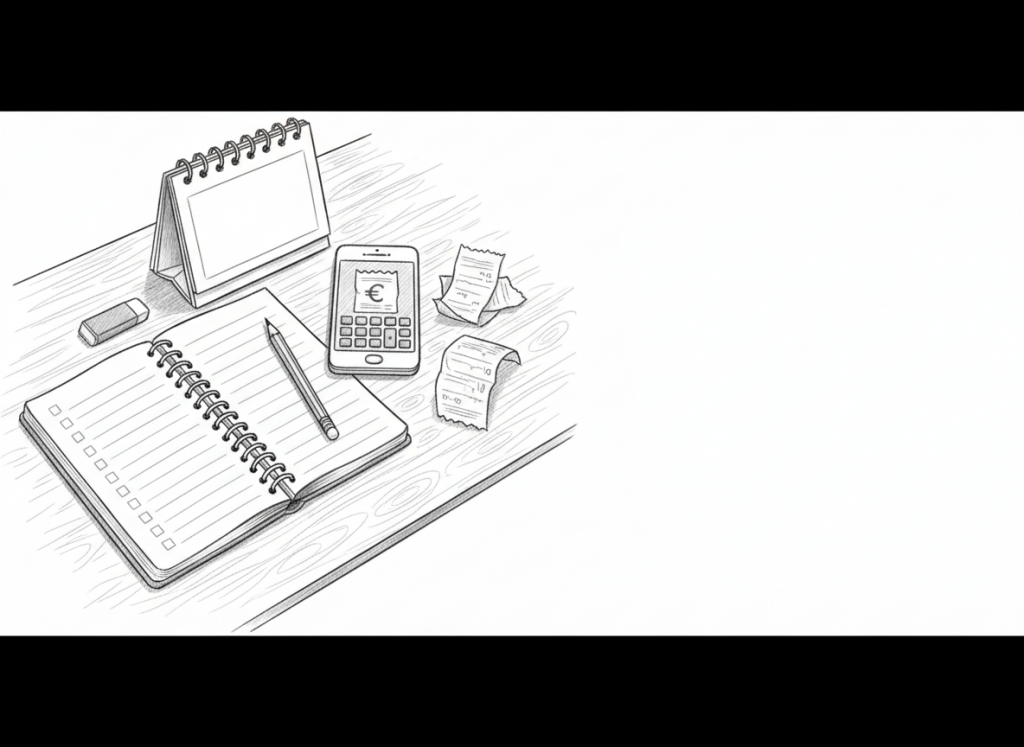
The good news is this: most bookkeeping issues don’t come from complicated mistakes. They come from a handful of common habits that quietly create chaos over time. Fix the habit, and the bookkeeping becomes simpler, faster, and far less stressful.
Here are five of the most common bookkeeping mistakes I see sole traders make—and what to do instead.
Mistake 1: “I’ll sort it later”
“Later” sounds sensible in the moment. You’ve got a client deadline, you’re tired, and you’ll deal with it when things calm down.
Except “later” often turns into:
- a stressful weekend of catch-up
- missing receipts you can’t replace
- a rushed Self Assessment
- and a nagging sense that your numbers can’t be trusted
When bookkeeping is delayed, the work doesn’t disappear; it multiplies. You forget what a transaction was for, you lose proof, and you spend longer trying to reconstruct the story than you would have spent recording it properly in the first place.
Do this instead: protect a weekly slot.
Consistency beats intensity. A short weekly session (even 20–30 minutes) keeps you close enough to the numbers that you stay in control.
A simple weekly checklist could be:
- download or review bank transactions
- record income and match it to invoices or sales
- capture and file receipts
- flag anything you’re unsure about (don’t stall the whole session)
Think of it like brushing your teeth: small, regular effort prevents expensive pain later.
Mistake 2: Mixing business and personal spending
Mixing personal and business transactions is one of the fastest ways to create messy records. It’s also one of the most common mistakes for new sole traders, especially when you’re starting out and trying to keep things simple.
The problem is, it rarely stays simple. Mixed spending leads to:
- hours wasted untangling transactions
- uncertainty about what you can claim
- missed allowable expenses
- and sometimes accidental over-claiming (which can create risk)
Even if you can separate it later, you’re relying on memory—and memory is unreliable when you’re looking at a bank statement from three months ago.
Do this instead: separate accounts early.
If you can, open a dedicated bank account for business income and expenses. It doesn’t need to be fancy. The goal is clarity.
If you must use one account temporarily, use one card for business only and keep brief notes for anything unclear. The aim is to reduce “detective work” later.
Rule of thumb: if you want clean bookkeeping, keep clean inputs.
Mistake 3: Not tracking expenses properly
Many sole traders miss allowable expenses because they:
- Don’t keep proof
- Don’t record small purchases
- or aren’t sure what counts as an allowable expense
This is a quiet profit killer. You might be paying more tax than necessary simply because you didn’t capture what you spent.
It’s also where people often get stuck. They think they need a perfect system, so they never start. Or they create a system so complicated that it collapses after a week.
Do this instead: capture receipts immediately.
If it takes more than 30 seconds, your system is too complicated.
A practical approach:
- Take a photo of the receipt as soon as you get it
- Save it in one consistent place
- Add a quick note if it won’t be obvious later (e.g., “parking for client visit”)
The goal isn’t perfection—it’s proof and clarity. Small expenses matter, and they add up quickly across a year.
Mistake 4: Ignoring cash flow (and confusing it with profit)
One of the most dangerous misunderstandings in small business is assuming that profit equals cash in the bank. They’re related, but they’re not the same.
Here’s the simple breakdown:
- Gross profit: what’s left after the direct costs of delivering what you sell
- Net profit: what’s left after all running costs
Now the key point for sole traders: net profit is not automatically “spendable cash.” You may still need to set aside money for Income Tax and National Insurance, and you may have upcoming bills that haven’t hit yet.
This is how people end up in a stressful position: the business looks profitable on paper, but cash is tight, and tax time becomes a scramble.
Do this instead: track cash flow separately (in plain English).
You don’t need complex forecasting to start. You need visibility.
A simple monthly cash check:
- What cash came in this month?
- What cash went out?
- What’s due next month?
- What do I need to set aside for tax?
Even a basic habit like this can prevent the “surprise tax bill” scenario and help you make better decisions—like when to invest, when to hold back, and when to chase late payments.
Mistake 5: Only looking at the numbers once a year
If you only look at your finances at year-end, you’re running your business while looking in the rear-view mirror. By the time you spot a problem, it’s already happened.
Year-end-only bookkeeping often leads to:
- missed expenses and missing receipts
- poor pricing decisions (because you don’t know your real costs)
- unnecessary stress
- and a lack of confidence in your own business performance
It’s also worth remembering that the UK is moving toward more regular, structured digital reporting through initiatives such as Making Tax Digital (MTD). Requirements vary depending on your circumstances, but the direction of travel is clear: leaving your finances until year-end is becoming a bigger and bigger risk.
Do this instead: build a simple monthly review habit.
Treat your numbers like a dashboard—not a post-mortem.
A monthly review doesn’t need to be complicated. You can ask:
- What did I earn this month?
- What did I spend?
- What’s my rough profit?
- What should I set aside for tax?
- What’s one thing I can improve next month?
This habit helps you spot issues early, make smarter decisions, and feel far more in control.
Final thought: consistency beats complexity
If you’re self-employed, bookkeeping isn’t just “admin.” It’s how you protect your time, reduce stress, and make sure you’re not paying more tax than you need to.
You don’t need a perfect system. You need a simple one you’ll stick to:
- a weekly slot to stay current
- quick receipt capture
- separate spending where possible
- and a monthly check-in to stay in control
Want the full guide?
If you want a clear, practical guide you can follow without jargon or overwhelm, grab your copy of the Zenith Bookkeeping eBook here:
https://zenithbook-keeping.uk/zenith-bookkeeping-book-offer-3005